The 2022 Dobbs v. Jackson Women’s Health Organization decision didn’t just roll back abortion rights – it created a humanitarian crisis by deepening economic, social, and health inequities — particularly felt by communities in the Southeast. With restrictive laws forcing clinic closures and pushing care far out of reach, ARC-Southeast has witnessed the harm caused by these barriers to care and worked to ensure that our callers can still access safe and compassionate reproductive healthcare.
Our latest research report, titled “Post-Dobbs: Distance to Care“, reveals the stark realities of post-Dobbs abortion access, from skyrocketing travel distances to overwhelming financial and logistical burdens. We analyzed several years of self-reported data from our callers before and after the Dobbs decision, and calculated the changes in the distances our callers traveled and the changes in total abortion costs.
The findings make it clear: abortion bans don’t just restrict access to healthcare, they actively target and harm marginalized communities, violate the fundamental human right to bodily autonomy and healthcare, and exacerbate existing systemic inequities. This data is critical in illustrating the impact of abortion restrictions in the Southeast post-Dobbs, and can be a vital tool for strengthening movement building and collective action.
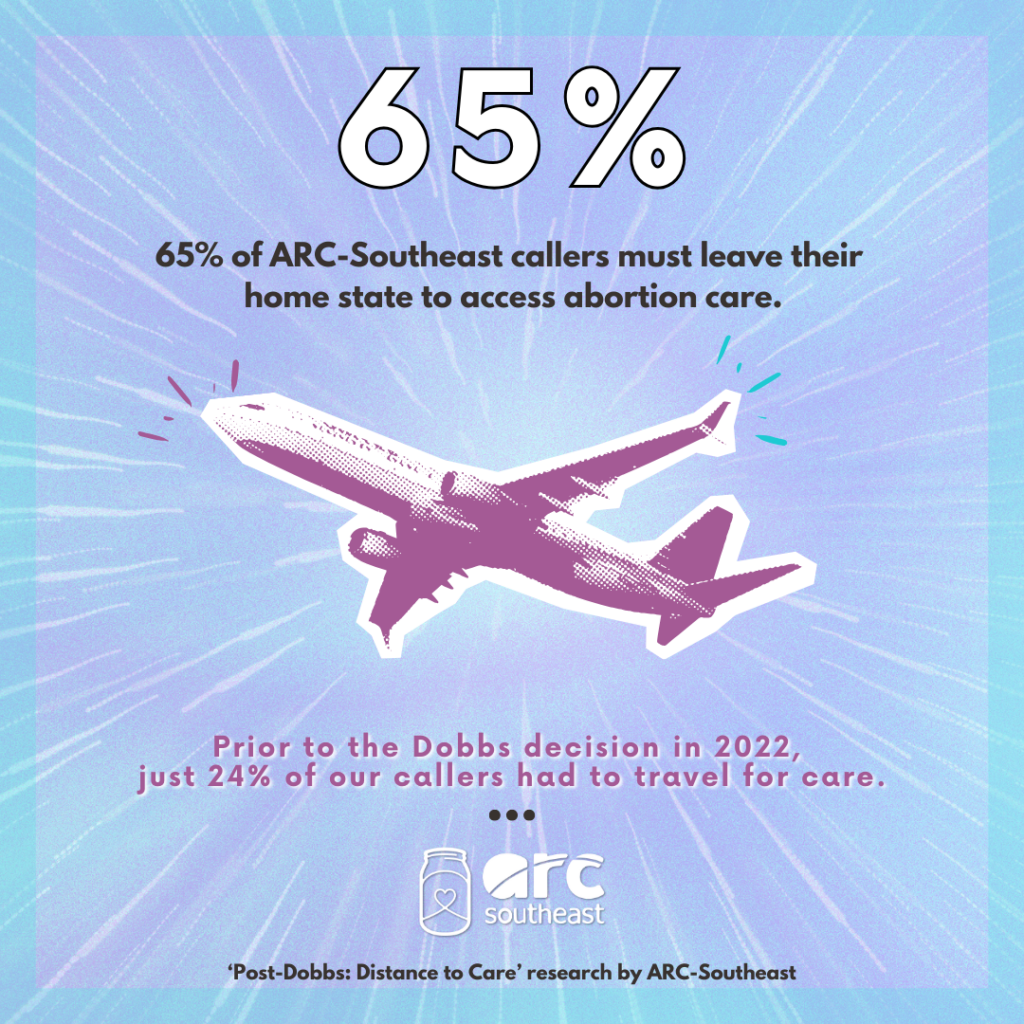
Since Dobbs, the percentage of ARC-Southeast callers forced to travel out of state for abortion care has surged from 24.2% to 64.7%, with average travel distances increasing from 50 miles to 258 miles.
The cost of obtaining an abortion has nearly tripled due to increased travel expenses, lodging, childcare, and lost wages. Practical support costs have grown to around $800 per case, underscoring the immense financial burden placed on individuals and the organizations working to assist them. Beyond financial strain, these barriers contribute to dangerous delays in care, worsening health outcomes, and deepening psychological distress for those navigating increasingly restrictive laws. These delays in care and higher risks of negative health outcomes disproportionately target and harm BIPOC communities, as Black people in the US are already 3 times more likely to die of pregnancy-related outcomes than white people.
Read the full report here:
[Post-Dobbs: Distance to Care White Paper by ARC-Southeast]
Looking ahead, we’re working on new research projects that highlight the need for urgent community support and collective power building. Ensuring sustained funding for practical assistance and movement building is essential to combating these growing disparities, and our data can help illustrate this dire need.
We need your support to continue fighting for abortion access in the South. Here’s how you can take action:
- – Donate to ARC Southeast to help cover rising costs for abortion procedures, travel, lodging, and childcare.
- – Support local networks of community care that protect bodily autonomy by volunteering, sharing online, and showing up.
- – Educate yourself on relevant data, information, and resources to share critical information with your community on the realities of abortion access.
Together, we can make a significant difference in the lives of those most affected by these restrictive laws and move towards a future where reproductive justice is not just an aspiration but a reality for everyone.
Did you find the Post-Dobbs: Distance to Care report useful and groundbreaking? Consider showing your appreciation by donating to ARC-Southeast today, and sharing online to let your friends know that you’re supporting your local independent abortion fund.