After Pride Month, Where Do You All Go? A Call to Action for RJ Advocates
By Vic K.
Reflecting on Pride month this year, it’s admittedly frustrating to see how diluted the messaging behind Pride has become since the initial Stonewall Riots. Many people may not know much about the history of Pride, the Stonewall uprisings, and TLGBQIA+ generally, because it’s not taught in our schools. The foundations of movements are always important to learn, because it can help us as RJ advocates organize and strategize more effectively.
Brief History Of Pride
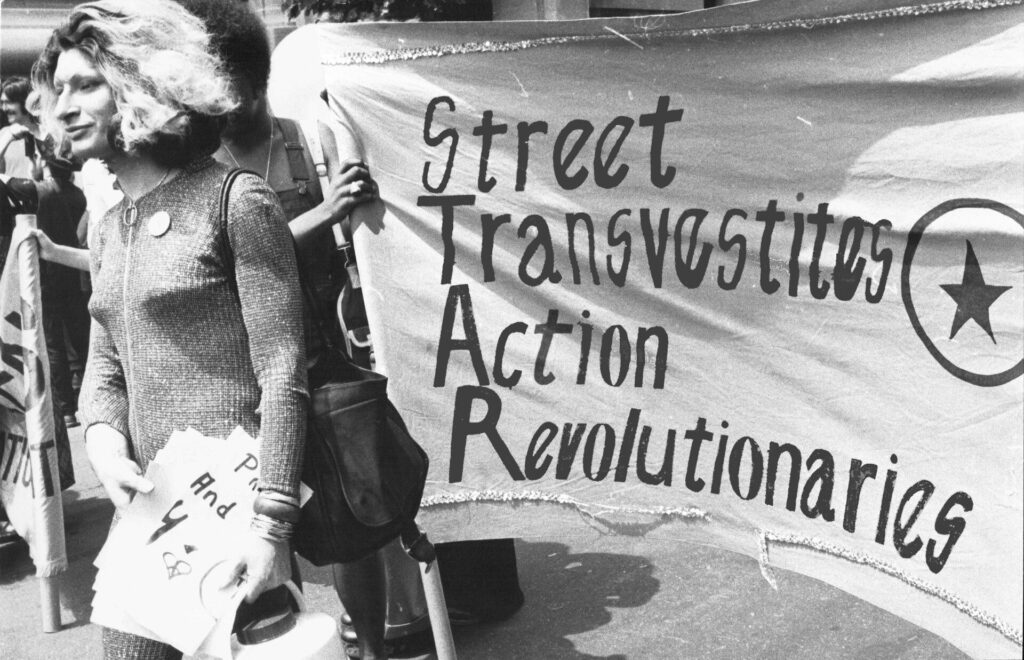
The riots that catalyzed what we now understand as Pride Month began at the Stonewall Inn in Greenwich Village, New York, on June 28th, 1969. The revolt was headed by Black and brown transgender women and drag queens, in direct response to constant violent police raids of the Stonewall Inn by plainclothes officers in the Greenwich Village area. Marsha P. Johnson, Miss Major, Stormé DeLarverie, and Sylvia Rivera are some of the figures known for their resistance during the revolt.
Several protesters were injured and arrested during the events, and this date marks a turning point in U.S. history: there was an understanding then that LGBT people in the U.S., primarily poor and working class queer and trans people of color (QTPOC), were no longer willing to be complicit in their systemic oppression. On the first anniversary of the uprising the next year in 1970, New York’s first Pride parade was held on Christopher Street, right where the Stonewall Riots occurred.
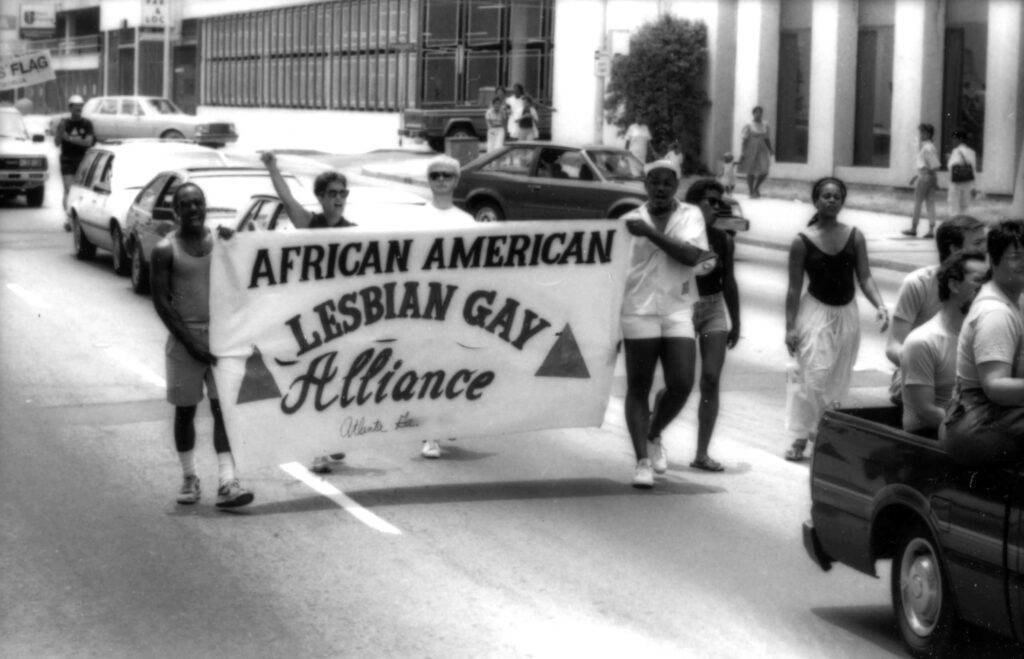
That June 28 anniversary inspired a variety of demonstrations and commemorations in many cities that weekend, from “gay-ins” in Atlanta after police raids in the Midtown area, to the Gay Liberation March in Chicago. Organizations and collectives of people fighting for the rights and liberation of LGBTQIA+ people across the country demanded further protections, defense from police and community violence, and recognition from their local communities.
This History Can Guide Our Fight Today
It’s important to be explicit about this history, because the history of Pride and queer identity in the United States has been removed from what we know as Pride today. There’s been a systemic and intentional distancing of modern day queer identity and history: pride was and remains protest, steeped directly in the liberation of queer and trans people–no more, no less.
The history of Pride has been co-opted and commodified by corporations. Pride is not a fun party with $40 at-the-door admission, nor is it a corporate-sponsored parade designated by police permits. Pride was intended to highlight the sacrifices taken by TLGBQIA+ activists and kinfolk of the past, primarily Black and brown transgender women of the 1960s. It also guides us to press forward against heteronormative* practices and oppressive structures, that constantly whitewash our movements and disregard our community members.
Today we’re facing a troubling trend that more organizations should sound the alarm on: the increasing rate of transantagonism. Transantagonism, often synonymous with transphobia, is the systemic hatred and suppression of transgender people, both individually and as a marginalized class. I invoke the word transantagonism rather than transphobia because the latter implies uncontrollable fear and disdain for trans people and trans inclusion. Transantagonism, however, speaks to how intentional and sinister the legislative oppression and negative sentiment towards trans people has grown in recent years. Hundreds of state bills specifically targeting trans people have been proposed in just the last 5 years, and hundreds have passed already. This shows that the U.S. is increasing transantagonism, it’s escalating as a powerful political tool. Our opposition spends countless hours debating, disparaging, and denying rights to trans people, to distract and divide.
As RJ advocates, practitioners, and allies, it is our duty to counter this to the best of our abilities!
The transgender community of the United States has sustained constant and escalating legislative attacks, especially minors, but these attacks are often ignored in favor of corporate pride events, pointless discourse, and weak “love is love” messaging. In 2026 alone our region has witnessed South Carolina repeal a ban against conversion therapy for minors, a bill that basically allows parents/guardians to legally abuse their child if they’re trans in Tennessee on top of the statewide youth gender affirming care ban; and in Mississippi any state-issued IDs must reflect the person’s assigned sex at birth regardless of gender identity or status.
The attacks our community are facing are unbelievable at times, but not insurmountable, history has proven. Again, if we are quick to “celebrate” Pride month, we should also be properly equipped to speak out against blatant discrimination. Our community has handled much worse than this.
RJ & Trans Liberation: Same Struggle
I believe that everyone who identifies as TLGBQIA+ has a responsibility to fervently fight against the increasing (bipartisan!) transantagonism plaguing the U.S., and everywhere the U.S. has its imperial grip. Affirmation of trans existence is core to the mission of both trans liberation and reproductive justice, making this an issue beyond just my personal opinion.
As abortion providers and reproductive justice practitioners, access to gender affirming care and affirmation of trans existence are imperative to our mission. Abortion rights and access are NOT separate from these efforts. In both the struggle towards reproductive freedom and the struggle towards trans liberation, patients are being banned from life-saving healthcare measures and their bodily autonomy is being diminished.
As practitioners of reproductive care and as reproductive justice advocates, we must always consider and affirm trans embodiment in our politics. Trans acknowledgement, affirmation, and autonomy are not bonus tidbits to include in reproductive justice advocacy, nor are they optional. They are inherent to the practice of reproductive justice. Reproductive justice depends on three main tenants: the right to have a child, the right to not have a child, and the right to raise a child in a safe environment. An environment that is transantagonistic, one that decides that a specific group of people are not permitted to access healthcare with dignity or live as they see fit without harassment, is not a safe one.
Keeping this in mind, the personal feelings of reproductive rights practitioners about the act of transitioning, or trans people’s expressions and experiences and very existence, should not defy this commitment to advocacy. Trans people have the fundamental human right to be trans, to have full access to healthcare that allows them bodily autonomy, and those who omit transness in their advocacy are not fulfilling the tenets of reproductive justice. In short, they’re not in poor taste, they’re flat out incorrect.
In many cases, RJ orgs are among the only groups properly trained and prepared to affirm and care for trans patients in reproductive health. In an ideal world this dignified care and access work would be done by the state, and not be delegated to nonprofit organizations, and everyone would be able to thrive in whatever manner they choose, but we do not exist in that world. We cannot allow the increasing transatagonism present in the United States sway us from our sacred responsibility, as we owe it to our callers and patients, our partners and collaborators, and ourselves.
Perhaps you, as either an RJ advocate or supporter, are not knowingly interacting with transgender individuals on a day to day basis; this does not matter. The responsibility to this community remains. On the person-to-person level, these many mandates, declarations, EOs, and bills have emboldened people to become even more violent to trans people than usual. At its best, conversations about trans people are met with indifference or dismissive commentary, but at its worst, trans people are being disregarded completely and violently harmed. In this blog post we touched on the lawfare being waged against trans people, but there is also community violence to address as well. We must start with ourselves and transform the culture and our movements from within.
What value do RJ practitioners serve if they are not advocating against such discrimination? If they are not making connections for people about how the struggle for bodily autonomy is intertwined with trans liberation? How will we respond to such injustices? I implore us all to look at trans rights in the United States, a country that postures itself as an authority on “rights” and “freedom”, as the litmus test for true reproductive liberation of our times, and to proudly counter the reality being pushed upon us by the powers that be. Push beyond corporate pride and be there for TLGBQIA+ people all year round.
* Heteronormative = Heterosexuality and cisgender identities, experiences, and bodies are seen as the default or natural standard, or “normative.” When something it heteronormative, it positions any other way of living as other or lesser than.